Drone Business Costs: A Realistic Budget for Commercial Pilots
By Michael Chen · Published · 4 minutes read

Starting a commercial drone business involves more than buying a drone and getting certified. Many new pilots underestimate the ongoing costs of insurance, maintenance, and compliance, which can eat into profits quickly. This guide breaks down the typical expenses you'll face in your first year and beyond.
We've gathered realistic ranges based on industry norms and pilot feedback, so you can build a budget that won't leave you scrambling when a propeller needs replacing or your liability policy renews. Whether you're a solo operator or building a small team, understanding these numbers is key to pricing your services profitably.
Certification and Licensing Costs
The first step is obtaining your Remote Pilot Certificate from the FAA. The knowledge test fee is typically around $150, though prices vary by testing center. Study materials can range from free online resources to $200-$300 for a structured course. You'll also need to pay for the certificate issuance, which is currently free, but don't forget the cost of a background check if required for certain operations.
Beyond the initial certificate, you'll need to consider recurrent training. The FAA requires online recurrent training every 24 months, which is free but takes time. Some pilots opt for paid refresher courses to stay sharp. If you plan to fly under Part 107, you'll also need to register your drone ($5 per aircraft, valid for three years). For a detailed walkthrough of the certification process, see our step-by-step guide.
- Knowledge test fee: $150-$175
- Study materials: $0-$300
- Drone registration: $5 per aircraft
- Recurrent training: free (online) or $50-$150 for paid courses
Insurance: Liability and Hull Coverage
Insurance is a significant but necessary expense. Basic liability coverage for a small drone business typically starts around $500-$800 per year for a $1 million policy. If you fly larger drones or do higher-risk work like inspections or events, expect premiums to rise to $1,500-$3,000 annually. Hull coverage, which protects your equipment, adds another $300-$600 per year depending on the drone's value.
Many clients, especially in real estate and construction, require proof of insurance before hiring you. Don't skip this. For a deeper dive into policy types and cost factors, check our article on drone insurance costs for small businesses.
- Liability only: $500-$1,500/year
- Hull coverage: $300-$600/year
- Combined policy: $800-$2,000/year
- Higher-risk operations may exceed $3,000/year
Equipment and Maintenance
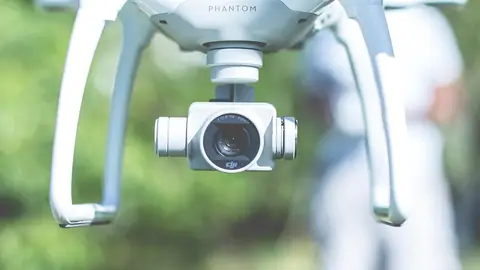
Your drone is your primary tool, and costs vary widely. A capable commercial drone like a DJI Mavic 3 Enterprise runs about $3,000-$4,000, while a larger platform such as the Matrice 300 can exceed $10,000. Don't forget spare batteries ($150-$300 each), a rugged case ($200-$500), and a tablet or controller ($500-$1,000). Budget at least $5,000-$7,000 for a starter kit if you're going pro.
Maintenance is ongoing: propellers ($20-$50 per set), motors ($50-$100 each), and sensor cleaning. A professional inspection every 50-100 flight hours costs $100-$300. Following a regular maintenance schedule can prevent costly downtime. Set aside 10-15% of your drone's value annually for maintenance and repairs.
- Starter drone kit: $5,000-$7,000
- Spare batteries: $150-$300 each
- Annual maintenance budget: 10-15% of drone value
- Professional inspection: $100-$300 per service
| Expense Category | Low Estimate | High Estimate | Notes |
|---|---|---|---|
| Certification & Training | $200 | $800 | Includes test fee, study materials, recurrent training |
| Equipment (Drone & Accessories) | $5,000 | $10,000 | Starter kit with spare batteries, case, controller |
| Insurance | $800 | $2,000 | Liability and hull coverage |
| Maintenance & Repairs | $500 | $1,500 | 10-15% of drone value |
| Software & Subscriptions | $1,200 | $3,600 | Flight planning, processing, logbook |
| Marketing & Website | $1,500 | $5,000 | Website, ads, networking |
| Miscellaneous (Travel, Contingency) | $1,000 | $3,000 | 10% buffer recommended |
Software and Data Management
Software is often overlooked but essential for professional operations. Flight planning apps like DroneDeploy or Pix4D start around $100-$300 per month for basic plans. If you offer mapping or modeling, processing software can cost $500-$2,000 per year. Cloud storage for imagery and data adds $100-$300 annually for a small operation.
You'll also need a system for logging flights. While paper logs are acceptable, digital solutions like DroneLogbook or AirData cost $50-$200 per year and simplify compliance. For a full breakdown of what to record, read our guide on flight log requirements.
- Flight planning: $100-$300/month
- Processing software: $500-$2,000/year
- Cloud storage: $100-$300/year
- Digital logbook: $50-$200/year
Marketing and Client Acquisition
Finding clients is a recurring cost. A basic website with hosting and domain runs $100-$300 per year. Professional photography of your services might cost $500-$1,000 one-time. Online advertising, such as Google Ads or social media, can consume $200-$1,000 per month depending on your market. Networking events and local advertising add another $500-$1,000 annually.
Don't underestimate the value of a professional portfolio. Investing in a few high-quality sample projects can generate word-of-mouth referrals. For event-based work, planning is crucial; see our guide to planning drone live events to avoid costly mistakes.
- Website: $100-$300/year
- Advertising: $200-$1,000/month
- Networking: $500-$1,000/year
- Portfolio development: $500-$1,500 one-time
Ongoing Training and Compliance
Regulations change, and staying compliant requires ongoing education. Beyond recurrent training, you may need waivers for advanced operations (e.g., night flights, beyond visual line of sight), which involve application fees and possibly consultant costs ($500-$1,500). Attending industry conferences or workshops costs $300-$1,000 per event.
If you hire employees, you'll need to budget for their certification and training. Each new pilot costs $500-$1,000 to get certified and onboarded. For a detailed look at license costs, see our article on commercial drone license costs.
- Waiver application: $0-$1,500 (consultant fees)
- Conferences: $300-$1,000 per event
- Employee certification: $500-$1,000 per pilot
- Recurrent training: free-$150
Hidden Costs and Contingency
Every business has hidden costs. For drone operations, consider travel to job sites (mileage, hotels), shipping equipment, and backup power solutions like generators ($500-$2,000). Data backup and cybersecurity are also important if you handle sensitive client data. Finally, set aside a contingency fund of at least 10% of your annual budget for unexpected repairs or slow months.
Cash flow can be lumpy, so having a buffer is essential. Many pilots recommend keeping 3-6 months of operating expenses in reserve. This might seem high, but it prevents forced equipment sales or missed insurance payments during dry spells.
- Travel and lodging: variable, budget 5-10% of revenue
- Backup power: $500-$2,000
- Contingency fund: 10% of annual budget
- Cash reserve: 3-6 months of expenses
- Budget at least $10,000-$15,000 for a professional first-year setup, including equipment, insurance, and marketing.
- Ongoing costs like insurance and software subscriptions add $3,000-$6,000 annually.
- Maintenance should be 10-15% of your drone's value each year to avoid downtime.
- Keep a cash reserve of 3-6 months' expenses to handle slow periods and surprises.
Michael is a remote pilot and editor with years of experience in drone operations and regulation. He focuses on providing practical guidance to both hobbyists and commercial pilots. His aim is to make complex rules accessible to everyone.